 AI and Lean Six Sigma
Coaching by Exception: The Andon Cord for Your Coaching Practice
July 25, 2026 · 6 min read


Mike Higgins · July 7, 2026 · 4 min read
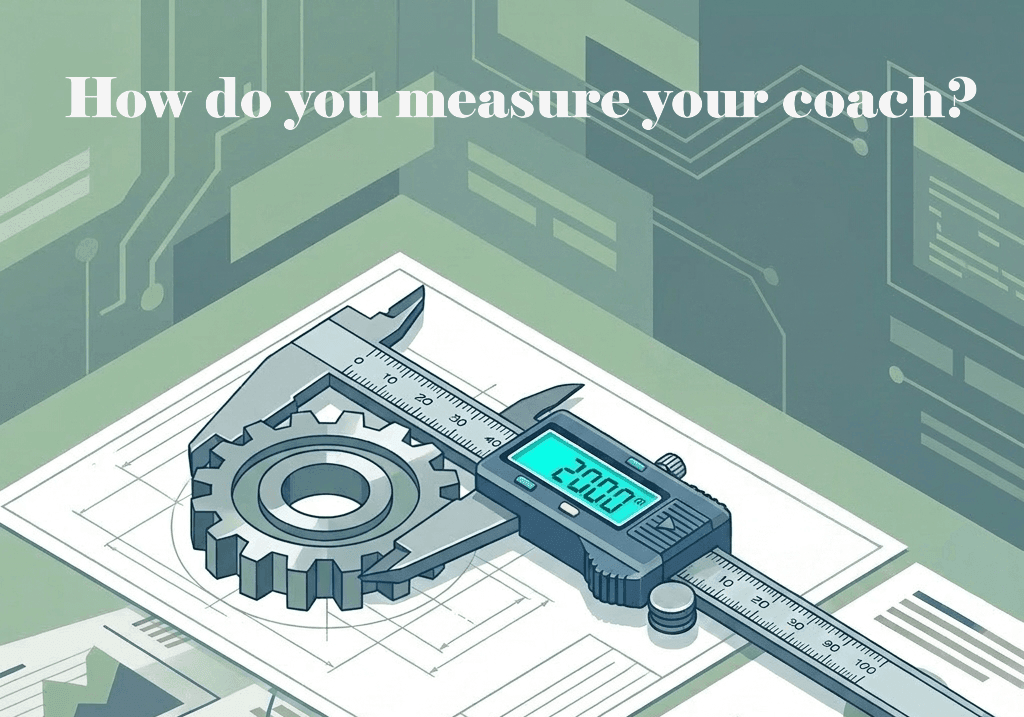
Lean Six Sigma rests on one stubborn conviction: you can't improve what you don't measure. We measure defects per million, cycle time, first-pass yield, process capability. We'd never sit in a tollgate and accept "I think the process got better." We'd ask for the data.
Yet there's one variable in every project we almost never measure — the one that may matter most: the coach.
Ask how a Lean Six Sigma coach gets chosen, and the logic runs: they hold a Black Belt or Master Black Belt, they've led a stack of projects, they teach the classes — therefore they can coach.
Look closely, and that's three different skills quietly collapsed into one. Executing a project proves you can solve a problem using the methodology and tools. Teaching a class proves you can explain a method to a room. Neither proves you can sit beside an anxious Green Belt in the messy middle of their project — data ambiguous, sponsor gone quiet, about to jump to a solution before confirming the root cause — and guide them through it.
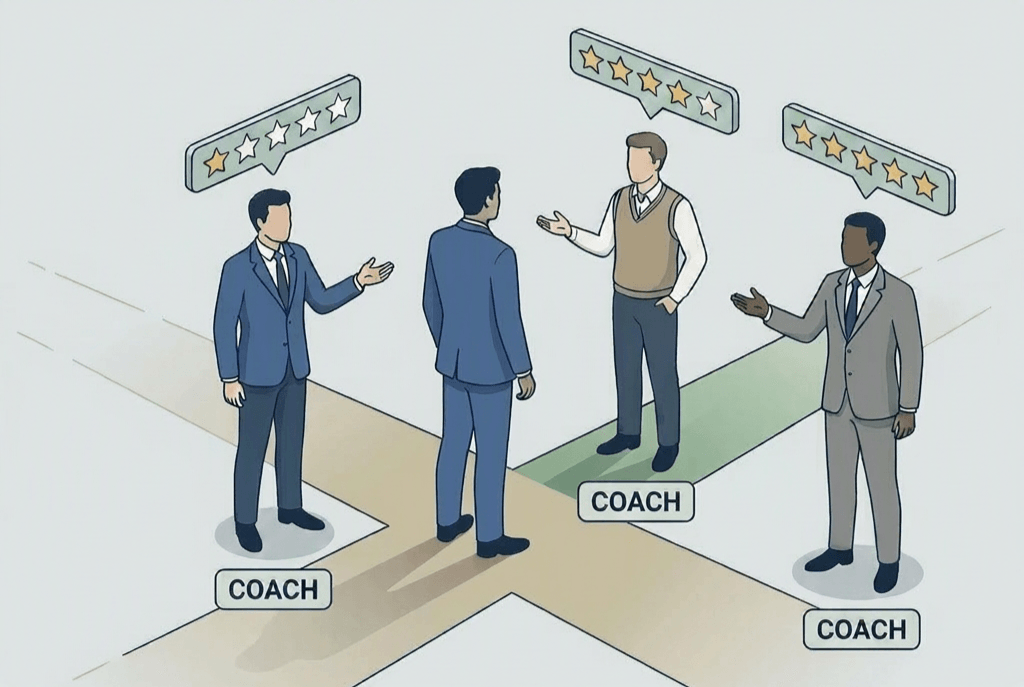
Doing, teaching, and coaching are related. They are not the same. I have written before about the gap between certification and execution — the place projects stall once the classroom ends, and coaching is supposed to bridge it. But we assume the 'expert' coach is an expert, and we've built a profession on that assumption without testing it.
And it's shakier than it feels. Research on coaching competence finds quality varies widely between coaches, and warns that models certifying coaches on credentials and expert opinion alone can "certify quality inappropriately" (Boyatzis et al., 2024). Even coachee and expert ratings of the same session frequently disagree (Lawley & Linder-Pelz, 2016). Credentials are a poor proxy for coaching effectiveness — in every field that has bothered to check.
By credible estimates, up to one in three Lean Six Sigma projects fail to deliver results — more than half in the hardest environments (Antony et al., 2020). Look at why, and the reason is rarely the methodology or tools. DMAIC works. What's usually missing is someone catching the drift early enough to matter — a coach.
We've made this case before: coaching doesn't scale, so practitioners get stuck between sessions and fall back on waiting, guessing, or a generic LLM — each quietly costing the project or the practitioners themselves. If coaching is that pivotal and that scarce, the logical response isn't to shrug and "trust the experts." It's to measure the coaching we have — so we can protect it, improve it, and aim it where it matters most.
And coaching can be measured. A meta-analysis of workplace coaching across dozens of studies found consistent, quantifiable effects on performance and development (Jones et al., 2016). This isn't fuzzy. We simply haven't pointed the instruments at ourselves.
To be fair, there are honest reasons. Coaching happens one-to-one, between sessions, in conversations no system ever captured — there was no data, only impressions. And culturally, nobody measures the Master Black Belt; they're the most senior person in the room, and measuring them can feel almost disrespectful.
Those were fair reasons. They're no longer good excuses. The data now exists — in the work itself — and the question is no longer whether we can measure coaches, but whether we're willing to.
Which raises the harder one: if you were going to measure a Lean Six Sigma coach, what would you actually look at — without turning it into surveillance? That's Part 2.
Antony, J., Lizarelli, F. L., & Fernandes, M. M. (2020). A global study into the reasons for Lean Six Sigma project failures: Key findings and directions for further research. IEEE Transactions on Engineering Management. Advance online publication. https://doi.org/10.1109/TEM.2020.3009935
Boyatzis, R. E., Liu, H., Smith, A., Zwygart, K., & Quinn, J. (2024). Competencies of coaches that predict client behavior change. The Journal of Applied Behavioral Science, 60(1), 19–49. https://doi.org/10.1177/00218863231204050
Jones, R. J., Woods, S. A., & Guillaume, Y. R. F. (2016). The effectiveness of workplace coaching: A meta-analysis of learning and performance outcomes from coaching. Journal of Occupational and Organizational Psychology, 89(2), 249–277. https://doi.org/10.1111/joop.12119
Lawley, J., & Linder-Pelz, S. (2016). Evidence of competency: Exploring coach, coachee and expert evaluations of coaching. Coaching: An International Journal of Theory, Research and Practice, 9(2), 110–128.
Found this helpful?
Why don't organizations measure Lean Six Sigma coaches?
Historically there was no data — coaching happens one-to-one, between sessions, in conversations no system captured, leaving only impressions. Culturally, measuring the most senior person in the room (the Master Black Belt) can also feel disrespectful. Both reasons made sense once; neither holds now that the data exists in the work itself.
Are credentials a good measure of coaching ability in Lean Six Sigma?
No. Holding a Black Belt, leading projects, or teaching classes proves you can execute or explain — not that you can coach a practitioner through the messy middle of a project. Research finds coaching quality varies widely and that certifying coaches on credentials alone can certify quality inappropriately (Boyatzis et al., 2024).
AI and Lean Six SigmaJuly 25, 2026 · 6 min read
 AI and Lean Six Sigma
July 13, 2026 · 4 min read
 AI and Lean Six Sigma
July 1, 2026 · 7 min read